Seven reasons to get excited about Microsoft Dynamics 365
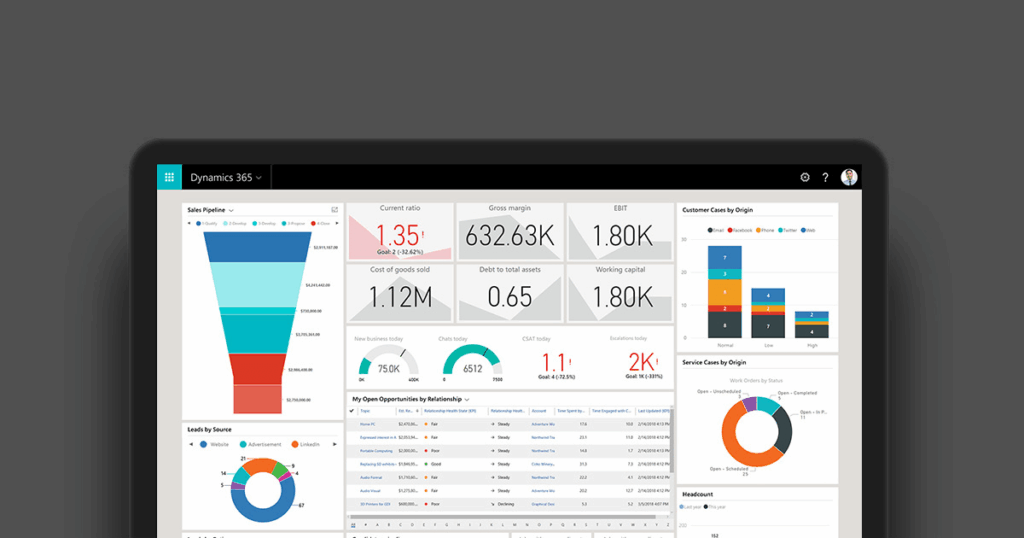
Microsoft Dynamics 365 is the next generation of intelligent business applications hosted in the cloud. It brings together all the different elements that have typically been siloed in the past and provides a unified business platform to manage business processes from sales and operations to accounting and HR. Microsoft Dynamics 365 unifies CRM and ERP capabilities into applications that work seamlessly together across sales, customer service, operations, financials, field service, marketing, and project service automation. Image credit: Microsoft Here are some of the myriad reasons you should adopt Microsoft Dynamics 365 to boost innovation, increase return on investment (ROI), and make a difference in your organization: The unified way of working Dynamics 365 is a multifaceted platform that offers a single end-to-end system for managing every aspect of the business from generating and qualifying leads to delivering services, managing finances and everything in between, effortlessly. The ease of use of Microsoft Dynamics 365 and its compatibility with other Microsoft products reduces the adoption efforts and lets the users adopt the system quickly and easily. The current version of Dynamics 365 provides a Unified User Interface that gives users the same experience across all the devices (mobile, tablets, and desktops). It also offers fully featured mobile apps for iOS, Android, and Windows. Flexibility to evolve as your business grows Dynamics 365 offers scalability and helps you expand as your business grows. It provides you with the ability to scale up and down as your business needs change. You can start using the apps individually or collectively depending on your unique business needs and design the best-fit solution for your business. It also gives you the flexibility to pay for what you need. Dynamics 365 comes with a monthly operation cost and a subscription model to choose from, this way, you can make the most out of your investment by paying for full access only for those users who genuinely need it. Seamless integration with the Microsoft Stack One of the most significant advantages of choosing Dynamics 365 is its easy integration with other Microsoft technologies. Dynamics 365 works well with apps such as SharePoint, Yammer, Outlook, Azure, Office, Power BI, PowerApps, and Power Automate, harnessing the power of existing systems. Productivity wherever you need it Microsoft Dynamics 365 is designed in such a way that your team can use it anywhere, at any time, on any device and be productive both in the office or on the road. Dynamics 365 makes employees more productive by automating their monotonous tasks into a workflow to save time for other important activities like customer engagement, service delivery, etc. With the power of a common data model, Power Automate, Power BI, and PowerApps, you can extend and automate any business processes to simplify tasks and mobilize processes. So, no more repetitive tasks now. Tailored for your changing business needs At no additional cost, Microsoft Dynamics 365 can be easily customized to support your extended CRM use cases. Dynamics 365 uses universal web standards such as Java, .Net, C#, and HTML, which means businesses can easily take advantage of customizing and extending the platform to meet its changing business needs. Dynamics 365 API also supports a wide variety of methods and functions to integrate with other line-of-business (LOB) systems. Built-in intelligence and actionable insights Dynamics 365 provides users with real-time insights and built-in intelligence to drive business decisions with accurate and up-to-date information. Power BI, Cortana Intelligence and Azure Machine Learning are all natively embedded in Dynamics 365 and offer predictive capabilities that help businesses understand customer buying patterns, identify new sales opportunities, forecast trends, turn tons of data into useful information, and much more. Robust data security and compliance Microsoft Dynamics 365 is hosted in Microsoft datacenters and features robust security measures and mechanisms to protect data such as identity and access management, encrypted connections, role-based security, threat management, and physical security in the trusted cloud. Dynamics 365 is GDPR compliant and follows EU privacy guidelines that allow you to maintain confidentiality, integrity, and availability of data. To conclude, Microsoft Dynamics 365 provides great potential to streamline the business processes fulfilling all your business needs, including increased productivity, reduced costs, deeper insights, and much more. Dynamics 365 has a clear advantage over its counterparts in the market and helps companies innovate and change the way they do business. Advaiya can help you in Dynamics 365 implementation and customization which can take your business to the next level and give you a competitive advantage. Get in touch with our experienced consultants who have helped businesses around the globe in implementing and migrating to Dynamics 365.
The future of human resource management – trends to watch in 2019
Every organization faces a plethora of HR challenges that restrict them from fully achieving their goals: from recruiting the right talent to training them, retaining them, and improving their productivity level. Technology is poised to transform and redefine the future of the human resource department. From moving to the cloud to the rise of mobile and analytics, we’ve been following this evolution for quite some time, and successful businesses are continually optimizing their business processes to keep their companies at the forefront of innovation. This year seems to be a year of accelerated transformative developments and technological advancements for the HR industry. So, let’s look at five technology trends that will dominate the human resources industry in 2019. From a legacy HR system to Cloud-based solution Cloud-computing and its different applications have been a hot topic for organizations of any size. The use of cloud-based applications in HR has increased over the past few years because more and more organizations are realizing its benefits and are making the transition. In the past, HR departments have relied on legacy systems to complete their operations but these days, many HR executives are expressing interest in cloud-based systems to scout high-quality talent, boost productivity, increase worker engagement and save time. Platforms like Dynamics 365 Talent, Zoho People, Workday HCM, BambooHR and many more can play a significant role in the cloud-based transition. Mobile-enabled HR operations Mobile apps are becoming the catalyst for HR management. HR departments are constantly looking for the best ways to communicate and collaborate with their staff especially in work environments where regular access to a desktop or laptop is not feasible. Organizations are on their way to adopt mobile applications that are bringing many HR functions like workforce planning, recruitment, onboarding, learning, accomplishment tracking and much more together into one single solution. People Analytics is a must-have It’s a well-known fact that data is a must for all facets of businesses today and, HR departments own more data than ever before. HR departments often struggle to turn their data into actionable insights, and using right softwares for talent can unify hiring and analytics. In particular, people analytics, also known as HR analytics, workforce analytics, or talent analytics, is a must to gain valuable insights to make better and faster decisions about all aspects of HR strategy including capability analysis, employee performance assessment, recruitment, churn analysis, etc. Automation – A game changer for the HR department Automation is invading the HR industry because, for HR professionals, onboarding new employees and routing requests through several people for approval is an important but time-consuming task — every time the same set of activities need to be performed which leads to a reduction in the productivity. Automating repetitive manual tasks and business processes like employee onboarding, tracking timesheets, calculating and approving leaves, tracking and managing expenses, etc. if done right, HR automation can help drive bottom line growth in many ways including saved time and increased efficiency, improved employee experience, cost optimization, and much more. Leveraging social media for recruitment Social recruiting means more than just posting job ads for vacant positions on social media platforms. Social media channels can be used to find, engage, select, and hire new talent – specifically LinkedIn – to hunt for potential candidates proactively. A human resource management system with native social networks integration help recruiters quickly find the talented people, deliver more engaging candidate experiences, simplify candidate evaluation, and streamline collaborative experiences among candidates, recruiters, hiring managers, and interviewers. Microsoft Dynamics 365 for talent is one good platform to smoothen the technological transformation for HR. This platform offers features which help in a collaborative hiring process, personalized onboarding experiences and creating a connected employee experience. Dynamics 365 for talent is an employee-centric solution that takes common HR function and brings them together in a meaningful way for managers, HR staff and employees. What do you think of these trends? Let’s discuss how these trends can be applied to your organization and make your life easier! Our #Dynamics365 and HR experts can help you decide the right platform and help you integrate your HR processes.
5 emerging field service trends to look for in 2019

2018 was an incredibly exciting year for the technology industry which has seen multiple initiatives and achievements. But until now, we have spoken theoretically about the real and useful applications of these innovative technologies in our work and personal lives. This has started to change! 2019 promises to be another significant year as technology has now integrated with our lives, and more and more businesses are adopting it to get the best out of it. Technologies like artificial intelligence, machine learning, cognitive services, and analytics, just to name a few – are becoming mainstream across the industries and their adoption is growing steadily. These technologies will be an integral part of how we work, communicate and interact with people around us, and deliver services in the next 3-5 years. Technology is now fundamental for every industry — from hiring good candidates to delivering better and faster services to the customers. So, before we shape our business strategies for the year, it is highly essential to equip ourselves with the latest technology trends to know what is possible and how our business can reap benefits. Let’s discuss five emerging field service trends that will gain prominence in 2019 and beyond. 1. Leveraging automation Companies are focusing on modernizing their field service journey more than ever, and automation is one of the essential drivers that helps improve productivity and provide the ability to serve customers in a better way. With the advent of cloud-based field service management software, it has become more accessible than ever to get access to the useful information and manage everything from checking the technician availability to scheduling and confirming bookings in calendar apps and email, to automated invoicing and billing. 2. IoT-driven predictive maintenance IoT has been a talking point for a couple of years, and we don’t expect this to change. Smart devices and appliances are connected to the internet today which means these devices will let the companies know in advance if an asset is broken, a part needs to be replaced, or maintenance is required. These predictive insights are transforming field services from reactive to proactive repairs and benefitting both customers and suppliers – identify and fix problems before customers raise, solve issues before failure, diagnose underperforming products and react swiftly. 3. Data-driven delivery The field service industry’s shift from corrective to predictive maintenance highlights the importance of how companies get data, make sense of it, and act on it to set them apart from the competition. To attain operational excellence and maximize service quality, it is essential to gain real-time visibility into metrics like customer acquisition cost, jobs per team member, daily fuel usage, travel time, cost per job, and more. In a recent study, Aberdeen Group found that best-in-class field service organizations that adopt analytics realize increase in service profits by 18%, customer retention rates by 42% and SLA performance by 44%. 4. The growth of artificial intelligence As IoT offers field-service representatives the ability to talk to machines and quickly identify issues; AI is what makes them aware of problems before they even appear. Many companies in the field services industry have started experimenting with AI-based strategies to train their technicians, prioritize work order requests, improve levels of customer experience, dispatch the right technician to the right job, keep track of their workers’ performance, and manage inventory without much delay. AI, in the form of chatbots, converse and guide many of the customer requests efficiently that allow operators to focus on more complex customer service cases and other important chores. 5. AR and VR transformations The field services industry has a lot to gain by integrating the innovative technologies like AR and VR into their business strategy. AR and VR enabled devices increases the technician’s efficiency, service delivery rate, and customer satisfaction in many ways like providing instant access to the entire knowledge base, getting instant access to maintenance history, helping in discovering the right equipment in order to carry out maintenance, identifying the useful information about the device which is about to repair, and much more. How are you preparing for these upcoming trends? We look forward to discussing field service management ideas, and its implementation with you. Want information about our field service management solutions? Click here