
Why is your business losing customers? Customer engagement pitfalls to avoid in 2023.

Your business is losing customers, whether you like it or not. McKinsey & Company recently discovered that only 13% of customers surveyed were loyal to one brand. According to the research, 87% said they shop around, and 58% have switched brands at least once. Why do people shop around? Why do customers look elsewhere for products and services? It’s time to determine why your business is losing customers and what you should do to remedy the situation. What are some ways you can check how healthy your customer engagement is? Your growth metrics, such as profits, conversions, brand retention, loyalty, profitability, etc., will all suffer if engagement levels drop. Here are some possible explanations for why these metrics might be declining: Not every customer is the perfect match for your product. It doesn’t matter if it isn’t right – like the diabetic who bought Ben & Jerry’s for their shopping cart or the environmental activist who purchased a Humvee. This could have been an honest mistake; they may have been sold misleading information. This would mean that such customers would no longer take your services. Some organizations can create this problem by intentionally targeting the wrong customers. For instance, there are many ‘family-oriented’ hotels that identify a business opportunity but lack adequate amenities. This results in wasted time and money as customer retention efforts must compete against new customer acquisition efforts. Partial vew of customer It can be frustrating for customers if you don’t have a comprehensive view of them. They need to share and reshare information with each other every time they call, but what if there was an automated system that could do all this work for you? The customer relationship management software keeps track of every client detail, such as past conversations and support queries. All these details can be accessed with the click of a button, freeing your team to focus on what they do best: selling, retaining, and developing customer relationships. Delivering poor customer service Today’s consumers have high expectations for customer service. In turn, Amazon and Apple have set high standards for customer loyalty: By placing customer satisfaction at the core of your business model, companies will experience greater success and improved customer retention. Both large and small businesses can learn from these examples to boost competitiveness and retain more clients. What defines customer service? Customer service is about being consistent, reliable, and responsive to every interaction. A bad customer experience can quickly turn potential customers away from your business and cause them to search elsewhere for services. During interactions with customers,– the most impactful thing is how much you know about the customer and how promptly you respond when questions or problems arise. A business needs to set goals for positive resolutions and response time targets, train customer service and sales teams properly so they know how to do the right thing when necessary and reward them accordingly. Use of outdated technology Technology plays an integral role in today’s brand loyalty equation. Consumers have high expectations and short attention spans, plus they are less tolerant of inefficiencies. If customers experience slow checkouts or a lack of online payment options, they may switch to businesses offering better customer service. Lacking adequate technology can cause customers to leave, leaving you with the task of keeping them satisfied. Make sure your websites load quickly across all devices, maintain a strong presence across social media channels and stay up to date. Furthermore, technology can be used to enhance products and services – for example, restaurants may want to consider listing on delivery apps so customers who prefer ordering takeout online can easily do so. Your product/service did not meet their expectations. Customers who are dissatisfied are likely to vent on social media platforms. Furious buyers may also post negative reviews in order to let others know they are not contented with their purchase. Your service should be tailored according to customer feedback. This feedback should be available to your product and service teams in terms of actionable data. Take this into account when creating or redesigning the offering. Partner with an experienced customer experience design consultant and someone who can help you draw customer insights into something meaningful. It takes a lot to produce or deliver a quality product or service that makes customers happy. Lack of coordination between team members Imagine you need to reassign one of your top sales reps from your company who leaves unexpectedly. The handover is incomplete and disorganized, lacking context regarding past interactions with prospects. This scenario frequently occurs within companies. Your team’s disarray will be evident to customers. What does this mean for customers and prospects alike? What outcome is likely to emerge? Customer engagement solutions like Microsoft Dynamics 365 Sales enable you to build strong relationships and take action based on insight, and close more deals quickly. This tool enables you to store all previous conversations (email, phone calls, messages) in one central location for the easy handover of information. Because the system records all customer interactions, it doesn’t matter if a query isn’t answered by the same person each time. Customer engagement in an age of fluttering loyalty In today’s highly competitive environment, running a business can be challenging. Acquiring new customers is expensive while existing ones don’t tend to stick around. Your business must survive in this climate of diminishing brand loyalty. Therefore, improving the customer journey is essential – even if it means uncovering signs that it might be declining. Recent findings by Gallup indicate that customers who are highly engaged generate 23% more revenue per customer than average customers. A customer engagement plan can help foster trust and enhance communication with clients. Customer success for any business isn’t solely determined by the number of new subscribers it attracts; it also depends on how well existing customers are retained. To keep customers engaged, create clear customer engagement and marketing strategies. Connect with your customers in a way they enjoy. Customer relationship management solutions offer
Why is your business losing out on productivity?

Organizations have always prioritized keeping employees connected and providing them with the tools to do their jobs efficiently and effectively. Technology has become an invaluable asset in recent years, contributing significantly to improved productivity levels. Today’s workplace is witnessing more disruption than ever before. Employees desire the flexibility to work from anywhere on any device with tools that boost productivity and enhance their work experience. These issues have driven organizations to embrace modern workplace solutions to provide seamless data and app delivery across multiple locations while safeguarding their endpoint devices. What are the advantages of this digital workplace era, and what workplace solutions should we expect? Here is our list of five modern workplace solutions. Modern workplace solutions offer numerous advantages. Over the past several years, digital technologies have rapidly advanced to enable people to work on the go. Now we can work from anywhere with cloud-based and mobile solutions. These are just a few of the numerous advantages modern workplace solutions provide. Five digital workplace solutions you must consider Intranets were once the go-to way of communication among colleagues. But as technology has progressed and changed, there are now numerous technological options for meeting, chatting, and working that you may not have considered before. Let’s take a look at the five top choices in modern workplace solutions today. 1. Communication tools Communication is fundamental for any company’s success. Communication plays an integral role in enterprise productivity and the success of employees and organizations – no matter how successful they become. Digital communication platforms offer more security than email since they eliminate the risk of misplacement or incorrect distribution of information. By centralizing all relevant data, these systems become a one-stop source for corporate communications. Setting up dedicated work groups using tools such as Slack or Microsoft Teams allows everyone to stay informed. This simplifies communication and maximizes participation from key stakeholders. Every member of the team can contribute by suggesting solutions, offering feedback, and answering questions – engagement is essential in motivating teams and helping them reach their objectives. 2. Collaborative suites According to TravelPaerk, 76% of businesses have already made the switch to a hybrid workspace model. If your company is following suit, then you will require a digital workplace tool in order to facilitate this transition. Digital workplace suites are modernized alternatives to traditional office spaces that can be utilized by distributed teams. They can replace traditional offices and offer more features than what a traditional workspace environment can provide. So, which are the ideal digital workplace tools for you? Cloud-based collaboration suites are a no-brainer when searching for the ideal solution. Mobility has become essential in today’s workforce, as employees require constant access to data and other resources. You must be able to adapt and utilize a collaborative suite in order to maximize the potential of your digital workplace. For instance, Google’s G Suite provides a suite of digital transformation tools such as Gmail, Docs, and Drive. Employees can easily share information and gain access to an expansive set of tools designed to enhance communication and collaboration at work. Want more information about our workplace productivity solutions? Connect with us. Dynamics 365 suite is Microsoft’s collaboration suite that facilitates communication, storage, and management of information as well as business activity. Word, Excel, and OneDrive are essential productivity tools for your employees. 3. Business process automation software Selecting the appropriate business process automation solutions is essential for businesses in today’s digitalization era. Companies are always on the lookout for technology solutions that will enable them to run their operations more efficiently and effectively. Over 80% of corporate leaders report increasing work process automation and using remote labor. Selecting the appropriate tools to accelerate intelligent Automation is essential, as these solutions can produce quicker outcomes with fewer programming skills required. 4. CRM tools Cloud CRM solutions are an integral component of digital transformation. A cloud CRM solution acts as a hub of tools that support companies’ sales, marketing, and customer service operations. Enterprise CRM systems are not limited to CRMs alone. Many CRM tools give salespeople and marketers all of the features they need in one convenient place – even including CMS software! As a small business or early-stage startup, it’s wise to opt for simpler solutions like Super Office or SugarCRM.Large enterprises can benefit from various CRM platforms like Salesforce CRM or Microsoft Dynamics CRM. 5. Project portfolio management tools Achieving project management success means increased efficiency, faster time to market, and beating your competition. Selecting the ideal digital tool for your company and ensuring its widespread usage are essential factors in making it successful. PPM solutions that are effectively utilized will enable your team to create tasks, plan timelines, monitor progress, and increase efficiency. It also gives managers and team members visibility into project activities which in turn leads to happier customers, more productive employees, and successful projects. Microsoft Project Online, Jira, Monday, and Trello are some of the top project management solutions. Research your options carefully so you can choose one that best meets your requirements. Adopting digital workplace trends Innovation is inevitable in the IT industry. Organizations that embrace digital transformation solutions often experience cost savings, enhanced security, and an improved employee experience. Yet it must not just be about using cutting-edge technology to boost productivity – each organization must have a personalized digital workplace tailored specifically for its needs – from design and optimization to taking into account people and processes. These tools can make people more productive and enable the digital transition strategy. Adopt the mantra “Work Smarter not Harder” with these capabilities that enable organizations to automate repetitive tasks, freeing employees to focus on more intellectual projects. Talk to our team today about modern workplace productivity solutions. We’ll help you work efficiently and stay connected with your team without a glitch from anywhere in the world.
How your organization should draw the benefits of remote work

At a glance: How modern cloud-based business productivity solutions are revolutionizing the way of working remotely How technology is enabling organizations to manage staff online and reduce office overload. Helping business improve their enterprise productivity by maintaining effective communication between team members as well as clients. Providing great flexibility and improved employee experience by addressing the needs of remote workers Hybrid work became a norm during the pandemic as companies tried to cope with the lockdowns and travel restrictions. Employees not being able to come to the office or go meet the clients were initially seen as a crippling situation, but it quickly became an advantage with a leap in modern workplace technology. Modern organizations now have access to the kind of infrastructure needed to adopt hybrid work, thanks to the availability of modern work management and business productivity solutions like cloud applications. In fact, data suggests that the number of patents filed for technologies that support remote-work capabilities has doubled since 2020. This has remarkably improved the applications and software products that aid in online collaborations, digital data, and document management. The biggest example is the marked enhancement in features and capabilities of Microsoft Teams since its launch in 2017: The meeting recording features became refined Meeting transcription quality improved and became a default feature Earlier, there were restrictions on the number of participants. Now we can host up to 100-200 participants easily Meeting duration cap was removed. We can have long meetings on Teams now Overall network latency reduced, which allows for better screen sharing and collaboration The video and audio calling quality was improved Background noise cancellation ensures that you can effectively participate in calls, even from noisy environments Auto-join, auto-recording, and attendance report functionalities reduce the moderation efforts Now, even external participants can join easily without needing to have a Teams login. Browser capabilities have improved remarkably Overall processing requirements to run these applications are better optimized According to projections, SMEs will spend more than US$100 billion over the next few years on collaboration platforms, cybersecurity solutions, and cloud-based apps. This technology is a part of our daily lives now. Modern tech is used to run schools, hospitals, offices, and colleges. You can now work anywhere you want, collaborate seamlessly, offer enhanced customer service, and learn new skills online. How remote work has evolved Remote work was possible with the basic tools available before. There were always email and chat applications. Things like Dropbox and Google Drive were allowing data and document sharing. However, they were not integrated into a comprehensive suite of applications. Things had to be managed on separate disconnected platforms. For that reason, it was thought to be cumbersome and inefficient. It was fine to hire a part-time freelancer for remote work, but we were not used to seeing “remote” full-time positions at companies. Now, we have broken that barrier. Technology has made it possible to do the same job, no matter where we live. It has allowed us to always stay in touch with clients and coworkers. Reduce your office overhead According to a Gallup survey, 43% of employed Americans said they have spent at least some time remotely.” This means companies have already understood the benefit of remote work. They can more economically manage staff online than hire people for a particular location. Maintaining full-time office spaces is expensive. Think of the electricity bills you will save. HR can save relocation bonuses, transportation and conveyance allowances, and many such expenses. Improve productivity You’d agree that most of the time spent by employees in the office goes into doing unproductive work like gossip, unnecessary discussions, and just idling. It’s because the actual time to do things that are necessary is much less than the working hours. Having a remote workforce can help your team members get on to the priority tasks with to-the-point communication. They can also track their performance with productivity tools like planners and task managers. Enterprise productivity solutions can be used by organizations to maintain effective communication between team members. Greater flexibility and improved employee experience Companies are projecting themselves to be modern and progressive by adopting hybrid work culture and sophisticated workplace productivity solutions to address the needs of remote workers. Employees working remotely, whether they are in coworking spaces, at home, or elsewhere, can benefit from videoconferencing, file-sharing platforms, and project management tools. Want information about our business productivity solutions? Click here. In times of global crises like pandemics and geo-political turmoil, many see the option of working from home as a safe and considerate way of working. Companies willing to be flexible about working hours, location, and time zones are more lucrative as employers. Are you looking for a business productivity services partner? Advaiya provides digital transformation solutions for enterprise-level organizations. Our team includes certified professionals who can customize and implement the latest business productivity solutions according to your business needs. Saurav Pranay Saurav is a Microsoft certified member for Dynamic and Project Online and has over fifteen years of experience in Project and Process management and has been involved in many Dynamics and Project Online implementations and have addressed solutions to challenging business needs by clients.
Top business process automation trends for 2023
The automation process was initially about increasing output and reducing labor costs. The post-pandemic boom has significantly accelerated digital adoption as businesses look for newer strategies to deal with market uncertainties such as supply chain disruptions and labor shortages. The top business process automation trends for 2023 indicate that business process automation is shifting towards intelligent automation. This unlocks more business benefits. Trending in business process automation We live in the digital age where information is everywhere, and everyone wants to make the most of every opportunity. The information age has seen a paradigm shift that allows enterprises to use advanced technologies to efficiently process the information they hold. Data-driven companies have begun automating complex tasks that were difficult to perform with the advent of enterprise resource planning systems (ERP) in the 1960s. BPA is a strategy that allows companies to use technology to organize their systems and personnel through workflows. Business process automation tools allow companies to automate, integrate and execute their processes. Because it preserves the computing architecture, it unifies processes with transparency. It integrates business functions that should be logically more connected and spreads them across the company. AI and ML allow IoT devices to be connected for tedious, day-to-day tasks. They make it possible to analyze and automate IoT systems. This technology can be seen in fitness watches, smartphones, and other wearables. The global predictive maintenance market was valued at $5.66 billion in 2021. According to Next Move Strategy Consulting, it is expected to reach $64.25 Billion in 2030. Predictive maintenance is an application of the Industrial Internet of Things. In 2026, 60% of IoT-enabled predictive maintenance solutions will be included in enterprise asset management products. This is an increase from 15% in 2021. Future trends expected in business process automation The growth story of business process automation is set to continue as we move into 2023. To improve profitability and efficiency in critical areas of their business, organizations will be more focused and inclined to implement business process automation solutions. Like all years before following the preceding years, 2023 will set a new trend for business process management and automation trend. We have identified some of the most anticipated business process automation trends in BPA implementation for the coming year. Low-code development allows businesses to build and automate applications using little to no coding knowledge. This visual language can be used to create great applications for your business. It’s only going to get more popular. Gartner predicts that low-code platforms will account for 65% of all app development functions by 2024. Low-code is a way for you and your employees to quickly create rich apps that allow you to work with IT departments more effectively at lower costs. According to 2019 research, more than half of Europe’s leading manufacturers have already implemented at least one AI use case in their manufacturing operations. By 2030, the artificial intelligence market will reach $78,744 million. Predictive maintenance is an application of the Industrial Internet of Things. In 2026, 60% of IoT-enabled predictive maintenance solutions will be included in enterprise asset management products. This is an increase from 15% in 2021. Robotic process automation bots can replace manual work. They can manage almost all business processes that humans can. Plus, they’re user-friendly. It’s as easy as flipping a switch and snapping a picture to set up an RPA Bot. They can be used for copying and pasting, connecting APIs, or scraping data. It is also possible to schedule, share and clone any data. RPA bots can seamlessly integrate with your existing workflow so that you don’t need to create or modify a completely new system. Different tools, such as Robotic Process Automation (RPA) and Digital Process Automation (DPA), will soon be integrated to enhance the power of business process automation platforms. AI-powered BPA solutions can revolutionize automation and transform digital workflows. It will speed up delivery times and enable organizations to do more with what they have. Business process automation will remain a key focus for growing companies. Every year, new trends emerge that influence the way companies operate. For business process automation, 2023 promises to be an important year. Automating processes will become necessary for business growth and will be regarded as good. Business process automation software can help organizations overcome many of the most demanding business challenges and boost productivity. It also increases employee satisfaction as they will get a chance to move from menial, repetitive tasks to more meaningful and intellectually fulfilling jobs. Well, that’s the aim, notwithstanding the Luddites. Advaiya’s intelligent BPA solutions have been helping organizations improve process efficiency, enhance customer experiences, optimize operations and increase workforce productivity. They also help to reduce costs and risks. To discuss your process challenges, contact us! Ankit Panchal Ankit Panchal is a Consultant in the Biz App Development team at Advaiya. He is an expert on business process automation. He is Microsoft Certified professional keen on building solutions using Power platform, Office 365 and SharePoint and has over 5 years of experience in IT and various Microsoft technologies.
Mobile field services management is rapidly changing the industry
Nearly every industry is now embracing remote work, including field service. While field workers have been working outside the traditional office and work environment, modern field service now includes a wide range of roles. These include independent contractors, frontline workers, home healthcare providers, salespeople, volunteers, and non-profit workers. It can be challenging for field service organizations to monitor and manage the activities of their employees because they have so many different roles, responsibilities, and schedules. This can be especially challenging if field workers don’t have the tools they need throughout the day. Field employees may have to switch between different collaboration tools like Microsoft Teams, text messages, email, phone calls, etc., which take away a lot of time and leads to scattered information. If field persons have immediate, seamless access to customer information and helpful resources at one platform with an updated scheduler, optimized routing, and a continuous connection to back-office support, it can greatly improve efficiency. Expectations of instant service and field service management Field service businesses must adapt to new technologies and trends as the industry changes. With the advent of field service-focused business models like Uber and Doordash, it has become increasingly important for companies to improve their service experience. Time is of the essence. Even traditional B2B companies need to up their game when it comes to delivering their services. It is the awareness that a customer is not going to wait around for two weeks for the company serviceman to come by which is compelling the companies to invest in mobile app-based field service management systems. If a business can’t deliver installations, repairs and maintenance services, and field inspections within 48 hours, then the brand image is going to suffer. Key drivers for mobile field service management Four key factors have led to the rapid rise in the popularity of mobile field service management: The field service industry is undergoing digital transformation. Accentuate information enablement and data-driven decision-making. Field service customers are increasingly looking for self-service options. Due to the skilled labor shortage and pandemic, remote-first tools should be given priority These key drivers have had a significant impact on the field service industry and created an environment that encourages reliance upon mobile-first technologies. These new technologies must provide field service companies with real-time information, enable field service customers to manage their schedules and appointments, and allow field service teams to access remote-first, intelligent tools. Field service organizations will reap the many benefits of mobile field service management solutions by aligning mobile-first technology and these four key drivers. Let’s look at some of the biggest impacts of modern field service management on the industry – Customer Experience Modern field service customers have high expectations about the customer experience from the company. Customers expect digital communication channels, self-service scheduling capabilities, visibility into time and service workflows, and timely feedback. Modern field service management apps with an intuitive, intelligent customer portal can help exceed these expectations. Sure, having a strong customer service team with experienced field service staff is essential, but relying on old systems like spreadsheets and scheduling software with limited capabilities to handle service requests would reduce the efficiency of the team. They need professional, customized field service automation software that enables your organization to enhance the customer experience. Digital-first Paradigm Companies need digital-first field service management, which allows customers to communicate easily with technicians and schedule service appointments. Businesses should be able to track technician routes in real-time and complete customer surveys from within the app. A self-service portal for customers can also help to improve customer retention and profitability in field service. Completely digitally transformed field services would enable organizations to reach the customer within a shorter timeframe, with complete knowledge of the issue, along with the necessary equipment and inventory of items to resolve the issue in a single visit. In the case of machinery or critical system installations, advanced field service management can get automatic notifications from the installed system about any fault, which can then be picked up by the nearest field service personnel. This can enable a host of service features like preventive maintenance. Data-enabled decision making Due to the increased reliance on mobile technology within the field service industry, companies are now able to access insights previously unobtainable. These insights are driven by data collected through various data points of the mobile service application. Field service organizations can leverage the mobile application to collect detailed service data and work order information. Compared to paper-based service forms and challans, which were used in field service earlier, mobile field service applications made it much easier to access service reports instantly from all locations and feed directly into the system to provide advanced analytics. That company-wide data can then be converted into actionable insight. These reports enable companies to make data-driven decisions using historical data to improve forecasting and planning. Companies are investing in this to ensure continuous improvement and find future revenue streams. Empowering field technicians Field service companies can help retain and attract the best technicians by empowering them with mobile field service management. Mobile field service management reduces silos and gives employees a greater understanding of previously chaotic and incoherent processes. Field technicians will find mobile field service management extremely beneficial for promptly delivering value to the ever-changing customer base. By automating complex scheduling processes, technicians can also be assured that their schedules and appointments will always be properly planned. Field management software provides field technicians with remote support capabilities. This includes access to customer information, troubleshooting and training materials. It is also possible to use Augmented Reality as an interactive visual aid that field technicians can use to better resolve the issues. Customers can use AR to communicate with their technicians remotely, eliminating the need to travel to the customer’s house to complete simple jobs. Advaiya offers advanced Field Service Management and automation solutions consultancy. The company has a long experience implementing Microsoft Dynamics 365 Field Service for major companies. Our Microsoft-certified specialists are always available
Why is Microsoft not a part of MAANG?

I was looking for some light weekend reading when my interest got piqued by an article that spoke about MAANG stocks. I’m usually not much into acronyms like these, but being someone who re-entered the technology field after 14 years, this MAANG thing got me hooked. So, I got to the bottom of this phenomenon. For the uninitiated, MAANG stands for Meta, Apple, Amazon, Netflix, and Google. These five companies are the “in-thing” for betting on stocks. It was initially coined as FAANG before Facebook rebranded as Meta. Long story short, technology bookies like to bet on the stock prices of MAANG companies because of their apparent market dominance and the frequent acquisitions they make. It’s what the cool kids are into these days! You might wonder why companies like Microsoft, IBM, Oracle, or Adobe are not on this list. Microsoft is larger than Google, Amazon, and Meta in market capitalization, and its stock prices are higher than Apple’s. Still, it doesn’t make it into the club. Why? The answer is simply that they are not considered “cool.” Yeah, you heard right. The cool kids want to work at MAANG companies because they are “cool” places to work. In contrast, the whole craze of working for big tech does not fit in with the image of Microsoft and its likes, who are seen as serious organizations. Is it though? At Microsoft, it is serious work to make businesses perform better. It spoke of a partner-centric business approach Satya Nadela resonated when he said, “You join here, not to be cool, but to make others cool.” So, no theatrics like Elon Musk, no announcing cool features of new gadgets in front of frantic crowds, and no cult of futurist customers who behave like religious extremists. Only stay calm and develop solutions for business challenges. One might think that this whole enterprise software industry is somewhat dull. Is it? Not really. The enterprise solutions industry is a thriving, growing, vibrant sector of its own. We are seeing more and more brands jumping into this segment. There’s stiff competition brewing. Top players in enterprise software are giving extremely lucrative career options to young techies. There are revolutionary innovations for enterprise tech, which are often not celebrated as they do it over at MAANG. If you say those innovations pertain to a particular community of business users and are not for the direct consumer, you might be wrong. Today enterprise products directly impact the individual consumer because you must consider that any consumer is, after all, an employee or a customer of some business. Even if enterprise products are primarily seen as B2B because the purchase decision is taken by the organization and not the individual, ultimately, it is the end-user who benefits. With a growing focus on improving customer experience and employee experience, these enterprise-level purchase decisions are increasingly influenced by individuals. Consequently, the awareness of enterprise products among the end users has also increased. I recently did a quick poll on enterprise tech brands, asking people which of the 4 (Microsoft, Oracle, SAP, and Salesforce) they thought was most desirable. It turned out that quite a lot of people had opinions about it. 50% of respondents voted for Microsoft, 21% for Salesforce, and 14% each for Oracle and Salesforce. While most of the respondents are in some way working with technologies from these companies, they prefer these tech brands in the context of enterprise solutions. In the future, I will do a more detailed study to figure out the motivations behind their preference. There is a major push for enterprise tech adoption in the context of digital transformation. It’s the buzzword! How to improve customer engagement? How to improve productivity? How to get insights from the business functions? These are age-old questions asked by enterprises. Yes, theoretically, things like process improvement and customer analysis have been academic subjects for a long time. Management studies always dealt with concepts of customer psychology and operational excellence but getting any practical outcome used to be a bastion for mostly large corporates who could indulge big consultancy firms in conducting training and surveys. Besides, software implementation used to be way expensive and time-consuming for small and medium enterprises. Now, even SMBs are taking a keen interest in modern enterprise software as implementing them has become more affordable. It seems like there might be a misunderstanding. The acronym “MAANG” typically refers to the group of technology companies known as FAANG, which stands for Facebook, Amazon, Apple, Netflix, and Google. Microsoft is not included in the original FAANG grouping, but it is often considered in a broader category of major technology companies. Some variations of the acronym include “FAAMG,” where Microsoft is included alongside the original FAANG companies. However, the specific grouping may vary depending on the context or source. Enterprise technologies have always been a reliable business for Microsoft. With the capabilities exhibited by enterprise-class low-code application platforms (LCAPs) like Dynamics 365 and Power Platforms, this market is becoming the most extensive area of competition. Even core sector industrial companies and OEMs have joined this race and are pushing more Enterprise LCAPs in the market. Google, Amazon, and Apple have their own enterprise software suits. So many regional and sector-specific players in this arena are doing quite well as SAAS-based platforms. It is estimated that by 2027 about 70% of all enterprise solutions used by companies will be based on low-code technologies. For a perspective, the global enterprise software market is about USD 236 Bn, while it is expected to grow to USD 348 Bn by 2028. In comparison, the global OTT market is at USD 45 Bn and is estimated to reach a little over USD 123 Bn by 2028. The marvels of innovation in enterprise software are understated and can go unnoticed. Take, for instance, the recent launch of Microsoft Syntex. Did you hear about it? Perhaps not. It’s a next-generation content AI which could revolutionize document management. Now, when most people hear about
Managing field workforces from home
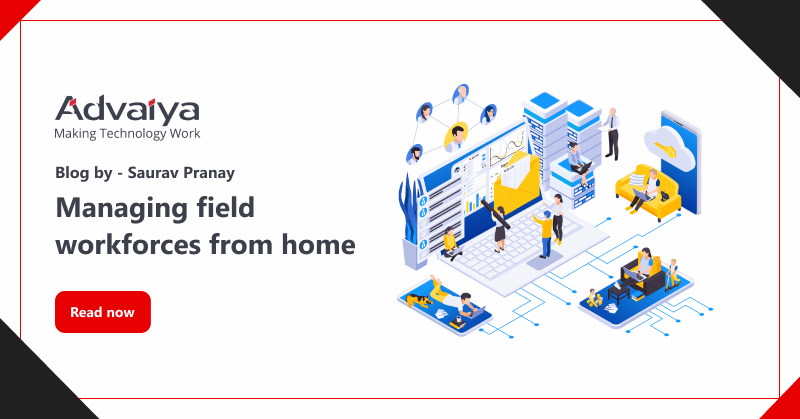
Field workforce management is integral to the success and business continuity of the utility industry and is a growing part of the service industry. The overarching goal of field workforce management is to ensure that people are in the right place at the right time with the right information. Current practices in the industry are manual, disconnected, and missing customer expectations. Organizations need to change the way their field workforce is managed and operated. Field services teams are an integral and critical component for an organization to drive business growth and develop superb customer service best practices. In order to help field services team, reach their full potential, they need to be armed with cutting-edge technological resources. This will allow them to better meet customer demand and manage these distinct customer channels on one unified platform and this can all be managed in a remote setting. With the growth of tools such as mobile phones and tablets, technicians can work from anywhere. This provides an opportunity for companies to reduce costs while increasing productivity. However, managing this workforce requires remote requires careful planning and control through trusted enterprise tools and services. Although managing field service firms presents its own set of issues and is increasingly complex and costly. One of the biggest issues service companies faces is effectively managing their field employees as they may struggle with field management such as remote asset maintenance and repair issues, the loss of critical knowledge from seasoned to newer technicians, and building trust across the organization to create a transparent and unified field force. Some of the common issues organizations face with field service management are – Keeping track of the field technicians’ output Field superintendent views are limited, making it harder to track the production and efficiency of field workers. The majority of the time, there is either a gap in the assigned jobs completed or jobs submitted to service managers on time. As a result of this discrepancy, managers have difficulty understanding the productivity and performance of field technicians and scheduling intervention in the event of a work reschedule required. Want information about our field service management solutions? Click here. Other issues, such as “how productive technicians are,” “how long did he take to complete the work,” “how courteous was he with the client,” “when did he check in or check out from the job,” and so on, are not addressed. Scheduling jobs for field servicemen Scheduling jobs for field technicians is another difficult task that a Field Superintendent encounters. It goes without saying that evenly allocating field jobs can be a nightmare for field superintendents. Furthermore, task scheduling necessitates precision to ensure that a job is assigned to the most qualified specialist who is familiar with the job and proficient in its execution. That implies the manager must distribute jobs based on expertise while also considering considerations such as technician availability, proximity to the project site, and so on. In brief, the scheduler must manually handle a variety of aspects while limiting risk in the event that the team is large. This means that scheduling every single technician’s workday before they arrive on site can take up hours of valuable time when dealing with large amounts of data collection equipment being hauled around town each day! Hassle-free communication with field technicians Real-time information unavailability is one of the leading causes of poor field efficiency and productivity. Field technicians cannot constantly connect with the back office and ask for information or cannot move from one location to another searching for information. Field technicians need ready access to the customer database via the field service management app on their phones or personal devices for real-time access to data such as warranty and guarantee, service history, inventory details, and so on is feasible, increasing efficiency. Overcoming field service management challenges To overcome the challenges elaborated above, organizations need to move to an automated field management solution that will help connect the field technician and office together more efficiently. With the procurement of automated field management software such as Dynamics 365 Field Service, organizations can benefit in many ways stated below: – Field superintendents and technicians can connect them in real-time using the field management platform technology to identify and track jobs, routes, time, and feedback, among other things. Also, can benefit from this in several ways, as the software helps to track and monitor the field serviceman’s performance and assist the field serviceman in reporting his tasks on time. Scheduling for field technicians is a complex process because there are so many factors that play into such as“how long it takes and what type of equipment needs to be used during each appointment” the availability hours, and the expertise required to execute the job, etc. Field service management solution AI-based model determines the equipment required along with the field technician’s availability by taking into account several factors such as his current schedules, scanning skillsets from a workforce data source, and pairing the proper technician to a certain job thus making the scheduling and rescheduling of job easy and automated. It also uses GPS to track the technicians’ locations so that the appropriate field technician may be found nearby depending on the work requirements. Field workforce management solutions establish an automated platform for standardized communication flow, giving field superintendents a conduit to connect with technicians in the field in the event of a crisis. In general, Field solutions can send field technicians automated messages concerning schedule changes, plan changes, inventory data, client specifications, and so on, keeping technicians aware of the latest information and planning the work & routes accordingly. One single view of market, territory, and field technicians working on the job is an unmatched benefit offered by Dynamics Field Service solution that makes it very easy for the field superintendents & schedulers to manage, plan, and shuffle the jobs. Want information about our field service management solutions? Click here. Conclusion The benefits of using Microsoft Dynamics 365 Field Service to manage
Six steps to a successful ERP implementation

An enterprise resource planning or ERP implementation solution offers significant benefits, especially in today’s mobile-savvy marketplace & complex business processes. If your corporation needs a software suite to manage its financial, human resources, supply chain, and other business operations, a centralized and integrated comprehensive business management system like Microsoft Dynamics 365 Business Central may be the useful and advantageous choice to go to. Dynamics 365 ERP enables your organization to access a shared database on any device reliably and offers easy customization, reduced technical costs, and improved productivity. However, there are a few key phrases in the ERP adoption process, each with its own objectives. These phases could be distinct or overlap, depending on the specific requirements of the company. Successful ERP implementation & upgradation of new business processes Phases of an ERP implementation plan – A typical ERP implementation life cycle includes six stages starting from discovery and planning, design, development, testing, and deployment to support and updates. Phase 1: Discovery and planning ERP offers comprehensive solutions to a wide range of business problems. It’s important to determine the true reason for putting ERP into place for your company, though. Your ERP implementation partner assesses your existing systems and procedures to identify the requirements, project scope, milestones, and modifications required. Once your vision and requirements are identified, the implementation partner will prepare the project plan. Want information about our ERP solutions? Consult with our experts As per the study by Panorama, 61.1% of ERP implementations take longer than expected and 74.1% of ERP projects exceed the budget. Although the primary cause of delay and overbudgeting is unclear definitions of ERP implementation. The ERP features must be evaluated in accordance with the barometer of synchronization within the needs of the company. The ERP demand list should be created in accordance with the budget and fundamental requirements to ensure a seamless and obstacle-free ERP deployment. Phase 2: Design phase ERP deployment includes several goals, including improving financial control, supporting organic growth, mergers, and acquisitions, as well as other typical procedures. The team will work on the specific criteria here in order to create the precise design of the new ERP system that your business needs. This entails creating a new, more effective business procedure and workflow. Since they have the most detailed knowledge of the current business process, users must be involved in the design of the new workflow. Additionally, it will also ensure that they will accept and use the new ERP solution. Phase 3: Development The development teams put up the standard solution using agreed-upon configurations and customizations of the ERP solution to support the newly specified process after they had clear design requirements. ERP software is designed after a significant amount of research and according to the needs of the specific industry. In some cases, there may be no need for customization. Additionally, the development phase also entails creating integrations with other work management and business productivity tools that ERP systems won’t be able to replace. Phase 4: Testing Testing is an important phase of the implementation process, which takes care of system and user acceptance testing. In many cases, testing and development can occur concurrently. For instance, the team may test-specific modules and features while implementing fixes and adjustments based on test results or may test one module while the other is in development. Sometimes this phase also includes beta testing, where some employees test the system for their day-to-day activities. This process ensures the ERP solution meets the requirements and is ready for deployment. During the pilot testing, management must evaluate the realization of the value of the system against the desired value of the company. After the successful testing and ensuring the ERP readiness for deployment, data migration activity should be performed before go-live. Under this process, the data from the old system is mapped to the new ERP. To ensure a smooth transition and future use of the software, only the most essential data should be transferred, and great care should be taken to ensure the data will be retrieved from the software whenever required. Training is also the most important aspect of the ERP software implementation process. It ensures there are fewer issues and more success, especially when ERP is implemented for the first time in the company or when the platform is changed from one ERP solution to another. Phase 5: Deployment This is the phase you’ve been striving toward: the go-live date! This is the day when you can officially get started with your new ERP software. Be ready for problems because, despite your best attempts to prepare for them, there may be many moving pieces and confused staff. Your ERP implementation partner will give your staff the necessary instructions and directions to comprehend the system, and they’ll be on hand to respond to inquiries and try to resolve any problems. The majority of data will be moved in the development and test phase. However, other information such as current open transactions should be transferred immediately before it goes live. Phase 6: Support and updates As you become more accustomed to the software, you might need help to create a plan to scale up your ERP solution along with your business. After deployment, your ERP partner will help to keep you satisfied and ensure your business achieves the desired benefits. During this phase, your implementation team may still be in charge of the ERP solutions, but they will now be more concerned with gathering feedback and making necessary adjustments to the system. Some organizations aim to focus on specific high-priority modules or processes and add others later, thus, some additional development and configuration will be integrated into the system later whenever needed. Implementing an ERP solution is a big investment decision by the company involving a large number of resources, therefore, management must continuously maintain tabs on the ERP software and maintenance schedule. Bottom line – Successful implementation of ERP software requires a significant amount of time and effort. The
Microsoft Power Apps solutions to energize your business

In today’s digital era, running a business has become quite simple. With ever-expanding digital connectivity, businesses of all industries have gained advantages in streamlining their business operations with business processes automation tools like Microsoft Power Apps. Microsoft Power Apps offers a plethora of benefits. In today’s blog, we’ll learn about Microsoft Power Platform, one of the business process automation solutions, and know how these solutions help organizations transform their day-to-day business processes and operations. What is Microsoft Power Platform? Microsoft power platform is a suite of business applications that combines the power of Power BI, Power Apps, Power Automate, and Power Virtual Agents to help organizations transform their business operations. This suite allows business managers to analyze data, deliver personalization, develop better applications and automate various processes regardless of technical expertise. The Core Components of Microsoft Power Platform – Microsoft Power Platform is composed of four primary business applications, that are – Microsoft Power BI: Power BI is a business analytics service that offers interactive visualizations and business intelligence capabilities with a simple interface, enabling users to highly-personalized and informative reports on the dashboard. It allows organizations to make smarter, informed business decisions by putting real-time data-driven insights into everyone’s hands. Microsoft Power Automate: Microsoft Power Automate is a workflow automation service that you can use to automate repetitive tasks to bring efficiencies to your organization. It offers low-code, drag-and-drop tools and hundreds of pre-built connectors and templates to automate repetitive, mundane tasks with ease. Expand your automation capabilities across desktop, web, and mobile with Power Automate apps. With Power Automate, you can create automated workflows between your favorite apps and services to synchronize files, get notifications, collect data, approve requests, and more with a no-code approach. With the Robotic Process Automation (RPA) capability of Power Automate, you can easily turn manual tasks into automated workflows with legacy systems that don’t support API-based automation as well. Microsoft Power Virtual Agents: Power Virtual Agents is an intuitive and graphical chatbot development platform that allows you to create powerful AI-driven intelligent chatbots that can answer questions posed by your customers, other employees, or visitors to your website or service. This is a no to low code business application platform that comes with hundreds of pre-built connectors which enable quick integration. with products and services without the need for data science expertise and development. Microsoft Power Apps: Microsoft Power Apps is a no-code business app development platform that allows you to build easy-to-use, mobile-friendly enterprise applications. It is a suite of apps, services, connectors, and data platforms that provides a low-code/no-code development environment in the form of Platform as a Service (PaaS) to build custom apps for your business needs. These are the four primary components of the Microsoft Power Platform. In this blog, we’ll be introducing you to Microsoft Power Apps and its benefits. Microsoft Power Apps – Low code/no-code automation tool for business It’s no secret that every modern profitable business relies upon information technology to achieve success. With Microsoft Power Apps, empower your teams to easily and rapidly build low-code custom apps that automate processes, and make your company more agile. Let’s explore, how the Power Apps solution is advantageous for you – Fundamental Benefits of Microsoft Power Apps – Get started building a professional app quickly Power Apps is a powerful tool that empowers organizations to create their own apps and solutions. Power apps allow organizations to create apps and APIs, which provide a user-friendly method for performing their daily tasks. Integrate with your existing Microsoft services: One of the most significant advantages of investing in a Microsoft Power Apps solution is, that you can connect Power Apps across the entire Microsoft Power Platform, Microsoft 365, Teams, Dynamics 365, Azure, and hundreds of other apps that allow you to use make strategic use of the data provided by other Microsoft services. No need to learn to code: One of the unique benefits of this platform is no-code business app development. This custom web app development platform doesn’t require the knowledge and skills of deep programming, which means business managers can build an app even without technical experience. Power Apps solutions are composed of pre-built “components” that are templates of automated workplace processes. By using these components, they can build custom applications that meet the individual needs of their businesses. Business process automation: As part of the Microsoft Power Platform, Power Apps can access Microsoft Power Automate, which enables organizations to add automation to several activities like – notifications, approvals, documents or record routing, etc. in their business apps. Optimize customer engagement and interactions: Customers are the lifeline of every business’s profits. If you can’t attract and maintain customer engagement, they won’t offer you long-term profits. A custom Power Apps solution can be of significant value. The technology optimizes your company’s IT solutions and offers more usable mobile apps for consumers, serving the need of your consumers just as much as the needs of your employees. Resulting in customers enjoying their experience of interacting with your business. Boost your brand reputation: When your customers do engage with your new custom power app, they will likely recommend your business to their friends and family members. Thus, investing in successful Power Apps solutions may improve your brand’s overall reputation. Wrapping Up – Now you know how Microsoft Power Apps solutions could benefit your business. You can recognize the need for custom mobile apps to streamline your business operations. Although it’s important to note that there’s actually quite a learning curve for the non-tech organizations who want to build their own apps, thus, it’s a good choice to work with Microsoft Partner to design and build your Power Apps solutions. Connect with our industry experts and ensure your organization develops the custom app it actually needs. Differentiate your Power Apps practice with an advanced specialization in Low Code Application Development. Kamal Kant Paliwal Kamal is a Principal at Advaiya, where he has worked with clients in an array of industries in areas such as complex systems delivery, infrastructure services, security, architecture, and IT strategy. Earlier in his career at Advaiya, he has played key roles as Technical Consultant, Architect, Business