
Automation in the construction industry: benefits and process
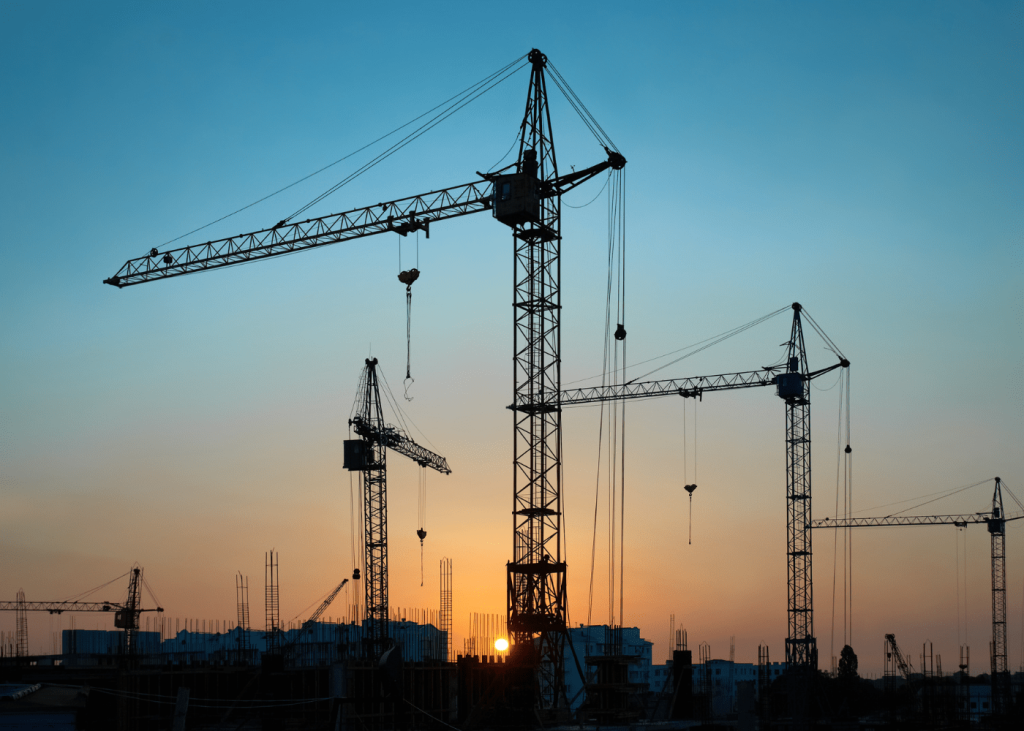
If you’re in construction, you know the daily frustrations. Purchase orders stuck in approval limbo. Project documents scattered across emails, WhatsApp, and shared drives. Hours spent on manual billing that could be spent winning new projects. Safety compliance paperwork that takes forever to track down during audits. Automation in the construction industry isn’t about robots laying bricks (though that’s coming too). It’s about fixing these everyday problems that drain your time and profit . We’re talking about the unglamorous but critical work of automating your back-office processes, document management, and project workflows . Let’s be clear about what works, what doesn’t, and how to get started without breaking the bank or disrupting your current projects. What is construction automation that actually matters When people hear construction automation, they often picture 3D-printed houses or autonomous excavators. That technology is exciting, but for most construction businesses, the real opportunity is in process automation using software to handle repetitive tasks so your team can focus on building. Two types of automation in construction Physical automation includes the headline-grabbing tech: Robotic bricklayers and welders Drone surveying and inspections 3D concrete printing Autonomous heavy equipment Process automation is where you’ll see immediate returns: Automated purchase order approvals Digital document management with version control Automatic invoice generation from timesheets Real-time project status dashboards Safety compliance tracking and reporting We’ve helped construction and infrastructure companies achieve incredible results through process automation. A large landscaping group we worked with reduced their billing time from 30 hours to just 4 hours that’s a 7x improvement . They didn’t need robots. They needed smart workflows. The real benefits of automation in construction (with proof) Let’s skip the hype and look at actual results from construction companies that have automated their processes. You’ll finally have accurate project data A major infrastructure company came to us with a common problem: they had multiple SharePoint sites with different permissions, making it impossible to track who had access to what . Project documents were everywhere, and finding the latest version was a nightmare. We built them a centralized permissions management system that automated data extraction and reporting . The results: 90%+ reduction in manual work 95% data quality index (up from around 60%) 90% reduction in project setup time When your data is clean and centralized, you can actually trust your reports. You know exactly where every project stands, what’s been spent, and what’s at risk. Safety and compliance become manageable An offshore marine service provider in the Arabian Gulf needed to manage their Safety Management System (SMS) documents . Previously, tracking who had read critical safety procedures was manual and unreliable. Someone could claim they’d reviewed a procedure, but there was no proof. Our automated document management solution delivered: 99% read acknowledgment rate (employees couldn’t access work areas without confirming they’d read safety docs) 100% version control accuracy (no more outdated procedures in circulation) 90% improvement in document search efficiency This isn’t just about avoiding fines. It’s about keeping your people safe by ensuring everyone has the right information. Your cash flow improves dramatically Late billing kills construction companies. The longer you wait to invoice, the longer you wait to get paid. We worked with a landscaping company that was taking 30 hours just to process their weekly billing . By the time invoices went out, they were already chasing the next week’s work. Through automated construction workflows, we achieved: Billing time reduced from 30 hours to 4 hours 100% visibility on all work orders 5 minutes to invoice a completed work order Imagine getting paid 7 times faster. That’s what automation delivers. You can actually scale your business A real estate consulting firm with 15+ business units and 1,000+ employees was stuck using Tally . As they grew, their manual processes couldn’t keep up. Approvals took forever, financial reporting was always late, and they had no real-time visibility into their operations. We migrated them to Dynamics 365 Business Central with automated workflows . The results: 80% improvement in billing accuracy 60% reduction in approval dependency Real-time financial dashboards for instant decision-making Construction automation lets you grow without proportionally growing your admin team. See how we can automate your construction workflows. Real construction automation examples that work Let’s look at specific automation solutions that deliver immediate value in construction. Example 1: Automated purchase order processing The problem: A construction manager needs supplies. They fill out a paper form, walk it to their supervisor for signature, then to accounting, then to purchasing. This takes days, and urgent orders get delayed. The automated solution: Manager fills out a digital form on their phone System automatically routes to the right approver based on amount Approved orders go directly to suppliers via integrated procurement system All stakeholders get real-time notifications Complete audit trail maintained automatically Result: What took 3-4 days now takes 3-4 hours. Example 2: Timesheet to invoice automation The problem: Field workers submit paper timesheets. Someone manually enters these into spreadsheets, calculates hours, applies rates, creates invoices, and sends them to clients. Errors are common and disputes frequent. The automated solution: Workers clock in/out via mobile app with GPS verification Hours automatically calculated and validated against project budgets Approved timesheets trigger automatic invoice generation Invoices sent to clients with detailed breakdowns Payment tracking and follow-up automated Result: We’ve seen companies reduce billing time by 85% while eliminating timesheet disputes. Example 3: Document control automation The problem: A major airport needed to manage thousands of documents across multiple departments. Documents were scattered, versions were mixed up, and finding anything took forever. The automated solution we built: Centralized repository with automated filing based on document type Version control with automatic archiving of old versions Permission-based access with automatic expiry for contractors Automated compliance reporting for audits Mobile access for field teams Results achieved: 90%+ reduction in manual document handling 85% reduction in document retrieval time 95% compliance index for regulatory audits Example 4: Safety incident reporting automation The problem: Safety incidents were reported on paper, often days after they occurred. Tracking trends and ensuring follow-up was nearly impossible. The automated solution: Mobile
Top AEC industry trends shaping 2025 and beyond
The architecture, engineering, and construction (AEC industry) is at a major turning point. After years of slow, steady change, technology is finally creating a massive shift in how we design, build, and manage everything from skyscrapers to infrastructure. If you’re in the AEC industry, you know that keeping up isn’t just about staying competitive; a company’s survival depends on adapting. So, what’s coming next? We’ve looked at expert predictions and emerging technologies to bring you the top trends that will define the AEC industries in 2025 and beyond. What you’ll read is not just a list of buzzwords. You’ll get a practical guide to help you see what’s happening, why a development matters, and what you can do about a situation right now. Let’s get to it. 5 trends that will shape AEC in 2025 Will 2025 be the first true post-pandemic year for the AEC industry? The signs point to yes. We’re seeing a move away from crisis management and a return to long-term strategic thinking. A new focus is powered by a handful of key AEC industry trends that are building on each other to create a smarter, faster, and more sustainable future. 1. BIM becomes mandatory, digital twins gain traction For years, Building Information Modeling (BIM) has been a “nice to have.” Now, a change is happening where having BIM is a “must-have.” Many governments and large clients are making BIM mandatory for public projects. The real story isn’t just BIM. What comes next is the exciting part: digital twins. So, what emerging technologies or digital tools will most significantly reshape the AEC industry? The change starts here. You can think of BIM as a detailed 3D blueprint. A model is incredibly useful for design and construction, helping teams catch errors before they happen on site. A digital twin takes that blueprint and brings a model to life. A digital twin is a living, breathing virtual model of a physical building or asset, updated in real-time with data from sensors. A living model means you can see how a building is actually performing, not just how a building was designed to perform. You can monitor energy use, track maintenance needs, and simulate changes before you make them in the real world. For companies in the AEC industry, a huge opportunity opens up for post-construction services and long-term client relationships. Preparing for a shift requires more than just buying software. A change in mindset is required. Invest in training: Your teams need to be fluent in BIM and grasp the principles of data management. Standardize your processes: Create clear workflows for how data is created, shared, and managed across project phases. Think long-term: Start talking to clients about the lifecycle value of a digital twin, not just the upfront cost of BIM. Adopting such tools is the first step toward a more data-driven approach, a foundation for many of the other AEC industry trends on this list. If you’re unsure how to build a business case for digital twins, you can get help. Schedule a call with our team to talk through the ROI. 2. AI finds its footing in design and construction Artificial intelligence (AI) is finally moving from a buzzword to a practical tool in the AEC industry. While we’re still a long way from robots running job sites, AI is already solving real-world problems and making projects more efficient. One of the biggest areas of impact is in clash detection, especially in complex Mechanical, Electrical, and Plumbing (MEP) systems. Traditionally, finding and fixing clashes where a pipe runs through a steel beam, for example, is a painfully manual process that can take weeks. Imagine an AI-powered plugin for a tool like REVIT. Instead of just flagging a clash, a program could automatically analyze the surrounding systems and suggest multiple, optimized solutions for re-routing the pipe, all in a matter of minutes. That kind of intelligent automation can prevent massive delays and cost overruns during construction. But how will AI and machine learning influence decision-making and risk management more broadly? Generative design: Architects can input project goals, constraints, and materials, and AI algorithms can generate thousands of potential design options. A process allows for more creative and optimized solutions that a human might never have considered. Risk management: AI can analyze data from past projects to identify potential risks in a new project, from safety hazards to likely budget overruns. A function allows project managers to address issues proactively. Our approach has helped clients achieve 95% risk mitigation on major projects. Predictive analytics: Analyzing real-time data from the job site lets AI predict project timelines with greater accuracy, helping to manage client expectations and optimize resource allocation. Of course, there are challenges. The biggest one is data. AI is only as good as the data an AI is trained on, and many firms in the AEC industry have their data locked away in disconnected silos. There are also valid concerns about the “black box” nature of some AI, where knowing how the algorithm reached its conclusion is not clear. As an industry, we need to demand transparency and ensure that human oversight remains critical. Will AI have negative impacts? A negative impact is possible. There are fears about job displacement, but a more likely outcome is that AI will augment human roles, not replace them. AI will handle the repetitive, data-heavy tasks, freeing up engineers and architects to focus on creativity, complex problem-solving, and client relationships, the things humans do best. 3. Sustainability drives a push to retrofit and renovate The push for a greener planet is one of the most powerful forces shaping the AEC industry. Buildings account for a huge portion of global energy consumption and carbon emissions, so clients, investors, and regulators are all demanding better performance. The result is a massive boom in retrofitting and renovating existing buildings. Upgrading an old building is often more sustainable than tearing an old building down and building a new one. A “green retrofitting” approach